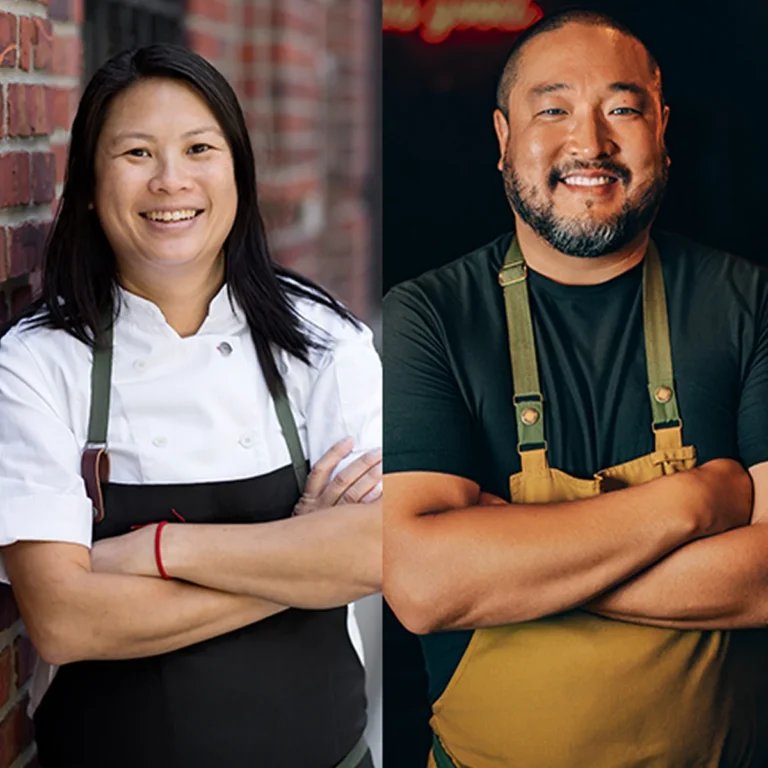
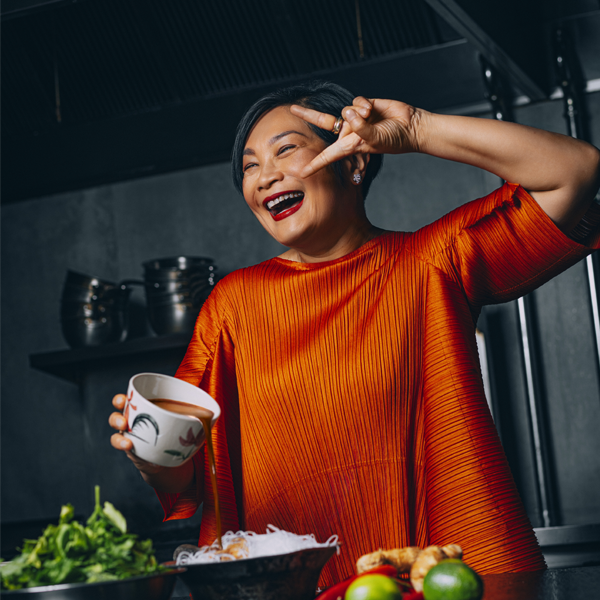
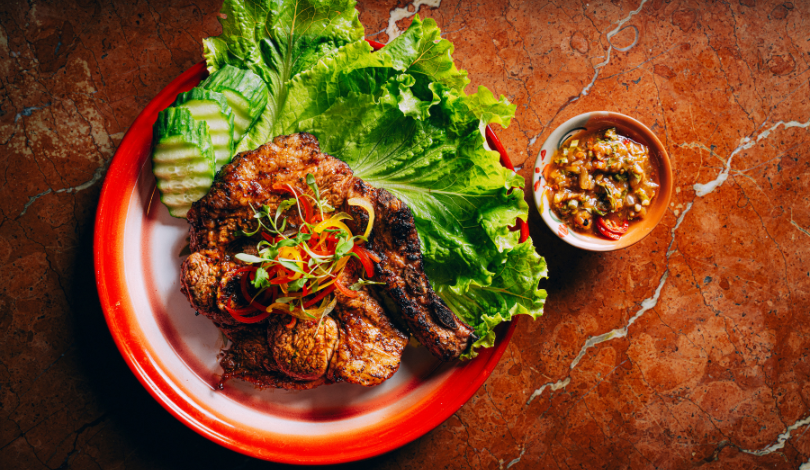
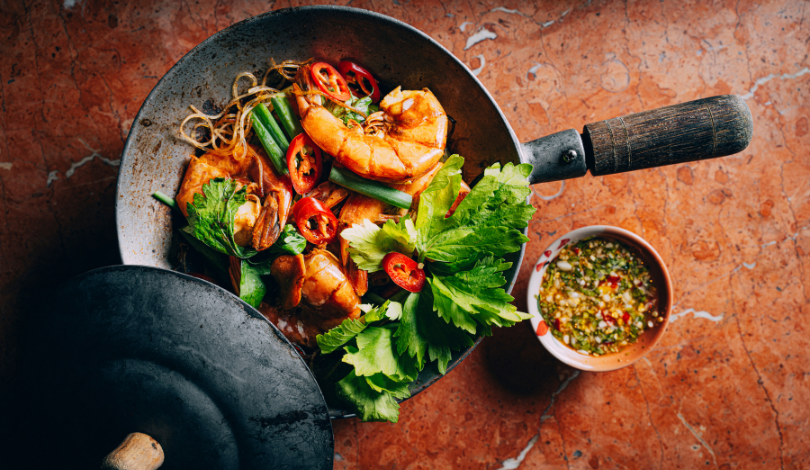
Recently, we spent a day with Nok at Kalaya, enjoying her food and her larger-than-life sense of style as we watched her cook and interact with her adoring staff and customers. Here are a few highlights from our lively conversation.
Q: What makes Kalaya different from other Thai restaurants?
A: I never compare myself with anyone else. I do what I do, and I know that what I’m creating is one hundred percent authentic to my life and my heart. I don’t think of Kalaya as a business; it’s my home. I invite people to come over, and I cook for them. We started as a tiny restaurant, and that’s still how I see it, even though now we have space for more than 180 people. I celebrate my culture and turn my vision into reality every day.
Q: What does homestyle cooking mean to you?
A: Homestyle means homemade. We make seven kinds of curry paste from scratch because we serve seven different kinds of curry. We blend five different curry powders and many more seasoning blends. Our dumplings are super labor-intensive and time-consuming. We truly appreciate the dedication of our three kitchen staff who tirelessly prepare mouthwatering dumplings and sticky rice all day long. That’s a uniqueness that Kalaya offers people. We don’t cut costs or corners. We take the time to do things the way I know is most authentic.
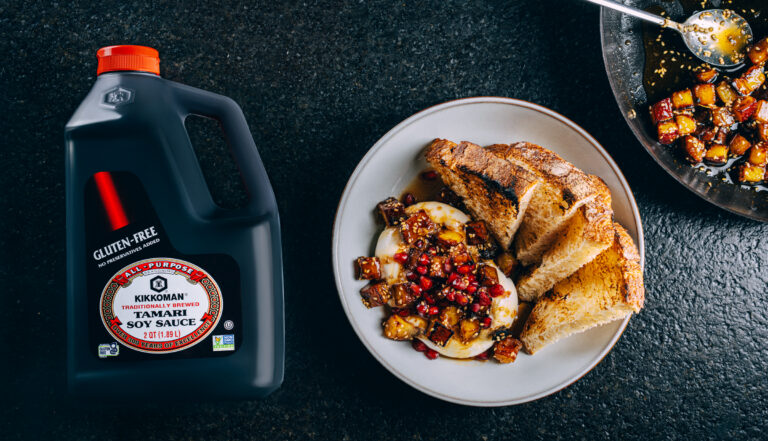
We use a lot of soy sauce in Southern Thailand and at Kalaya. People might think of fish sauce when they think of Thai food, but soy sauce has been part of Thai culture for a very long time. It arrived in Thailand when people began migrating from China.
Q: What inspires you about Kikkoman® Soy Sauce?
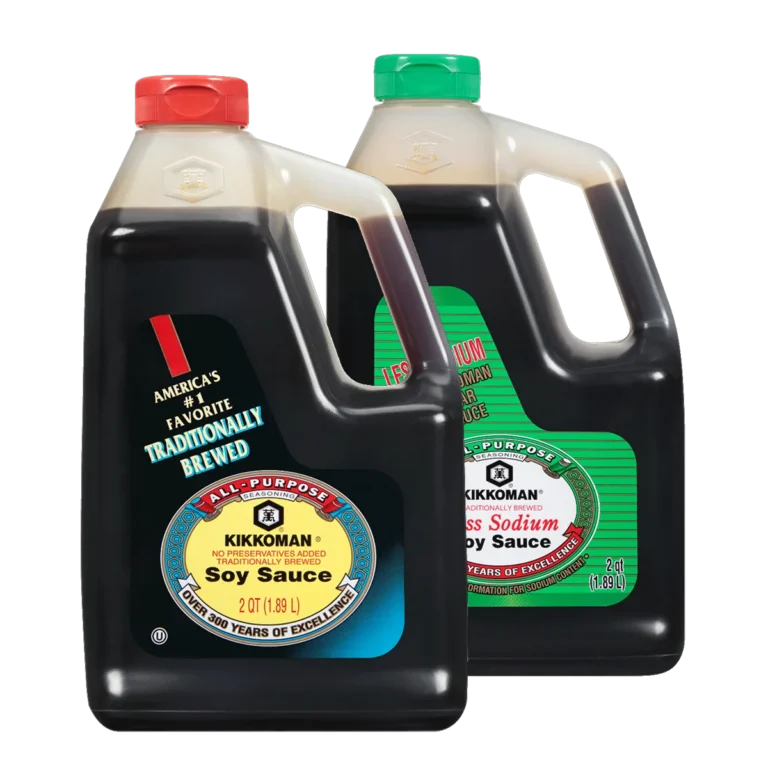
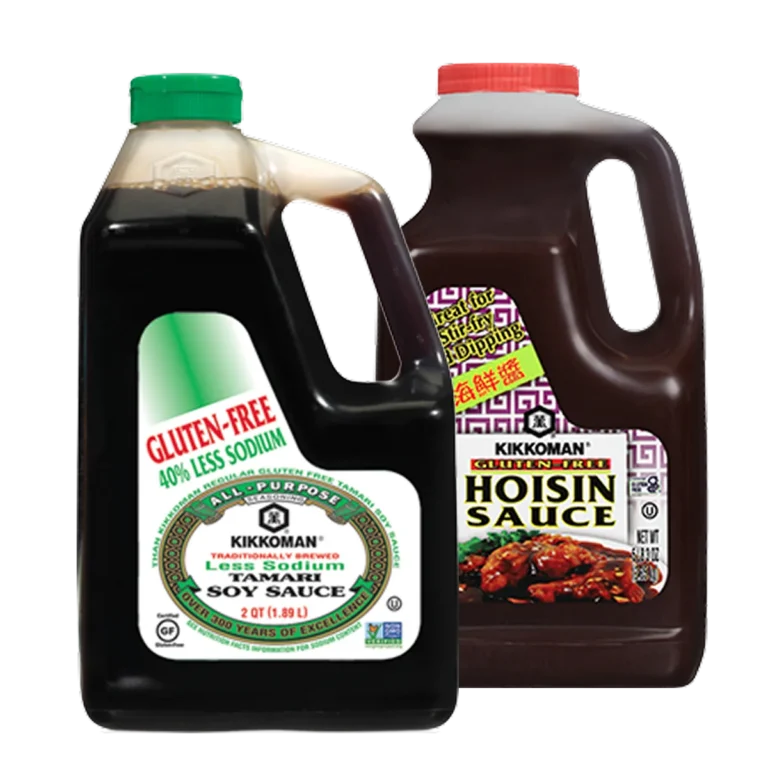
A: I remember when I was growing up, everyone knew Kikkoman® Soy Sauce. Every region of Thailand had its own local soy sauce, but Kikkoman was like the national brand—very trusted and familiar. Today, I especially love Kikkoman’s Gluten-Free Soy Sauce and Gluten-Free Non-GMO Tamari Soy Sauce. It has excellent flavor even without gluten. I like to use soy sauce in place of salt to get more flavor and umami. For example, when I make a vinaigrette, I add soy sauce and maybe a pinch of salt at the end to adjust the seasoning.
“I like to use soy sauce in place of salt to get more flavor and umami.”
Q: What are some Thai ingredients you think chefs should know more about?
A: Shrimp paste! I grew up helping my mom run her stall where she sold homemade curry pastes and pantry staples. We always had big blocks of shrimp paste, as it’s one of the main ingredients in curry paste, and people would often buy both together. Whenever I go home to Thailand, I taste every shrimp paste I see and keep buying them! I’m obsessed. Shrimp paste takes some getting used to. It’s stinky, but once you cook it, it becomes fragrant and adds incredible briny umami from the amino acid fermentation. I use it in curries, relishes, and all kinds of dishes. Palm sugar is another ingredient that more people should discover. It has so much more complexity than cane sugar or brown sugar and adds a deep, aromatic caramel flavor, not just sweetness.
Q: What advice would you give chefs who are interested in exploring Thai flavors and techniques?
A: Buy my book! No, seriously, my new cookbook, Kalaya’s Southern Thai Kitchen, is based on all the building blocks of Thai cooking—the sauces, the curry pastes, the condiments. Once you master those, you can make anything. Also, I would say ingredients are everything. Make sure you use the best seasonings, the best soy sauce, and the best produce you can find. And remember, it’s not rocket science. It’s play. It’s fun. I’d say it’s even therapeutic!