Campus Dining: The Forefront of Plant-Forward Cooking
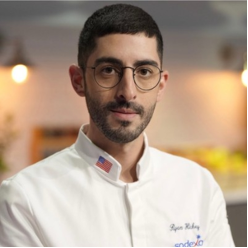
Chef Ryan Hickey
University of Vermont
Kikkoman Kitchen Cabinet chef Ryan Hickey didn’t realize it at the time, but his culinary career started early—at 14, bussing tables at local restaurants.
What hooked him wasn’t just the food. It was the energy. “I loved the pace, the teamwork, the controlled chaos,” Ryan says. “You could feel that everyone was working toward the same goal.”
He worked his way up to server, but foodservice still wasn’t on his radar as a career. After high school, he enrolled at the University of Vermont (UVM) to study economics. To pay the bills, he picked up a restaurant job waiting tables near campus.
But something about the kitchen kept pulling him in.
“I liked being a server,” he says, “but I quickly realized there was more rock-and-roll happening in the kitchen. That’s where the artistry and the creativity were.”
So, he made the jump to the back of the house, landing a job at Rí Rá, a high-volume Irish pub in Burlington.
“That was where I got my first shot at real cooking,” he says. “And right away, I was hooked.”
Ryan took a break from college to hone his technique working with some outstanding fine-dining chefs, and eventually went back to UVM, and finished his studies in 2020.
Back to School—In a Whole New Way
When the pandemic hit, the independent restaurant world changed overnight.
“The pandemic really squeezed the privately owned restaurant scene,” he says. “I was approaching 30, newly married, and thinking about starting a family. I needed stability.”
Friends working in campus dining had been encouraging him to make the switch.
“They kept saying, ‘Come on over. The quality of life is better—and they actually take care of you.’”
So, Ryan returned to his alma mater—but this time, not as a student.
Sodexo, the UVM foodservice contractor, hired him as a floating temp cook, rotating among the university’s four dining halls. Within a month, his talent and leadership stood out, and he was offered a full-time role.
Today, at just 34, Ryan serves as Senior Executive Chef at Harris Millis Dining, overseeing a team responsible for feeding 3,500 students a day in one of UVM’s busiest all-you-care-to-eat dining halls.
Cooking as a Team Sport
For Ryan, leading a campus dining operation feels a lot like captaining a team.
“As a kid, I played a lot of sports, and I was captain of my high school lacrosse team,” he says. “Being an executive chef is a similar kind of role—you’re building trust, coaching people, challenging them, and helping them grow.”
That mindset has helped him stand out on campus—not just as a skilled chef, but as a mentor and team builder.
“I’m usually the youngest person in senior management meetings,” he says. “But it doesn’t bother me.”
Then he laughs.
“Technically, I’m even younger than that—because I was born on leap day. So, I always joke I’m only about eight and a half.”
Four years into his role, Ryan has fully embraced the world of institutional foodservice.
“In restaurants, guests are paying for a meal, so expectations can be intense,” he says. “Here, the dining hall is part of the students’ home. When we really nail something—when we go above and beyond—they’re incredibly appreciative. Feeding thousands of people well every day is a pretty amazing feeling.”
Fresh, Plant-Based Ingredients Matter More Than Ever
Ask Ryan what trend is shaping campus dining most today, and his answer comes instantly: plant-forward cooking.
“If you don’t have strong vegetarian and vegan options, you’ll hear about it,” he says. “Students are paying close attention to what they eat, and highly processed ‘fake meat’ alternatives aren’t always the answer. They want food that feels fresh and real—vegetables that taste like vegetables. And when they do eat meat, they’re looking for high-quality, whole-muscle proteins.”
Putting the Crave Factor in Plant-Based
Ryan’s number-one rule for making plant-based food exciting? Make it visually irresistible.
“When people see a plant-based dish, they sometimes start asking, ‘Where’s the meat?’” he says. “But if you make food beautiful, they stop asking that question—because now they’re not looking for something, they’re looking at something.”
So, he and his team focus heavily on presentation. “We want students to see a dish and go ‘wow’ before they even know what’s in it. We’ll add a cool garnish or use a vegetable in a surprising way.”
Local sourcing plays a big role, too. “I try to bring in fresh, local, sustainably grown ingredients whenever I can. Students care about sustainability, and honestly, it just tastes better.”
Another of Ryan’s flavor secrets: Kikkoman® Gluten-Free Tamari Soy Sauce. “We go through it by the gallon,” he says. “It adds saltiness, flavor, and a ton of umami, which is perfect for plant-based cooking—even in dishes that aren’t Asian.”
He also relies heavily on Kikkoman® Rice Vinegar. “It’s my go-to for adding bright acidity that makes other flavors pop, and it’s a great way to accent fresh vegetables, sauces, salads—you name it.”
Conclusion
For Ryan Hickey, campus dining isn’t just about feeding thousands of students a day—it’s about shaping how the next generation eats. By making food visually appealing and building bold flavor and umami into vegetables with ingredients like rice vinegar and tamari, he’s showing that plant-forward food doesn’t have to feel like a compromise. When it’s done right, it’s simply delicious—and that’s what keeps students coming back for more.
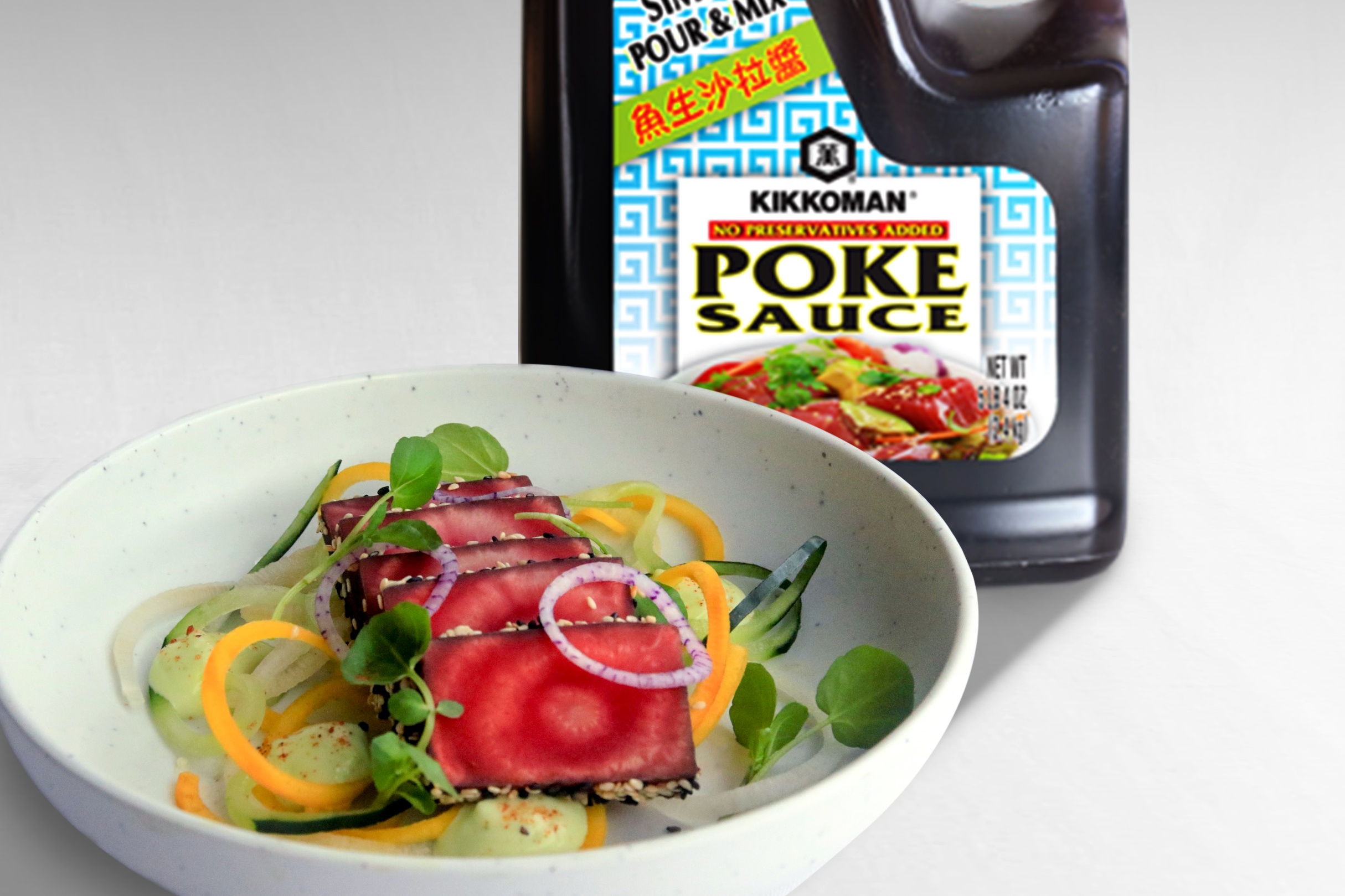
SESAME-CRUSTED CHIOGGIA BEET “TUNA” STEAK
Sashimi Without the Seafood
Menu description: Tamari-infused beets served over a salad of fresh, spiral-cut beets, cucumbers and daikon with a smooth and spicy wasabi mayo.
Chef’s notes: “This is a really fun presentation that mimics the look and texture of tuna sashimi using candy-striped Chioggia beets. When you cook them sous-vide with Kikkoman® Ponzu, the sauce infuses the beets and deepens their color and flavor. It creates a plant-based ‘sashimi’ experience that’s surprising, fun, and really satisfying.”
VIEW RECIPE
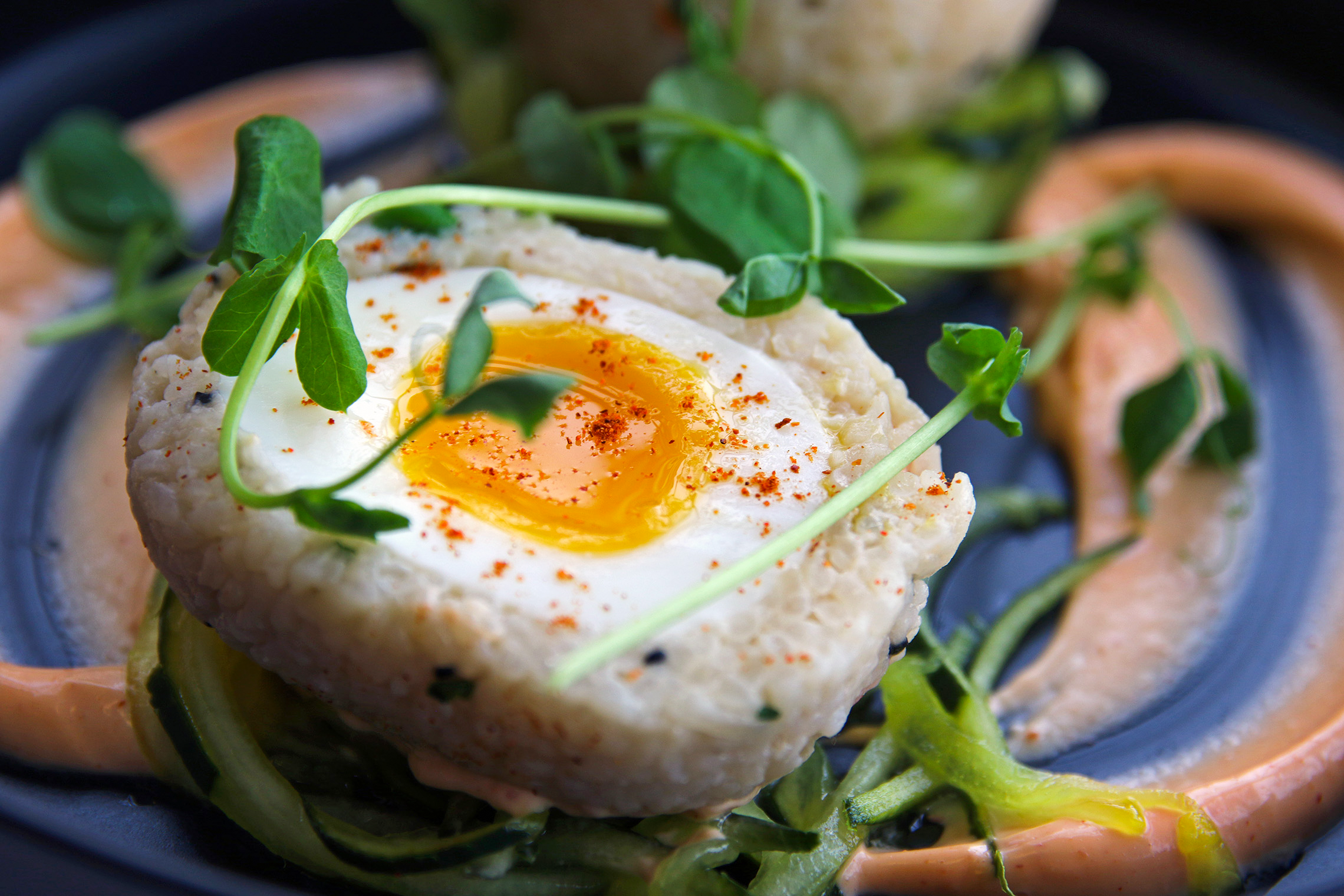
ONIGIRI-STYLE RICE EGG ADAPTATION
Fried Rice Reimagined
Menu description: A soft-cooked egg, wrapped in fried rice, served with pickled cucumbers and a spicy-creamy Sriracha mayo. A great gluten-free option for breakfast, lunch, dinner, or grab-and-go snacking.
Chef’s notes: “I started thinking about egg fried rice and wondered what would happen if you flipped the idea—fried rice around the egg instead of the other way around. The result is kind of a mash-up of a Scotch egg, fried rice, and a Japanese onigiri rice ball.”
VIEW RECIPE
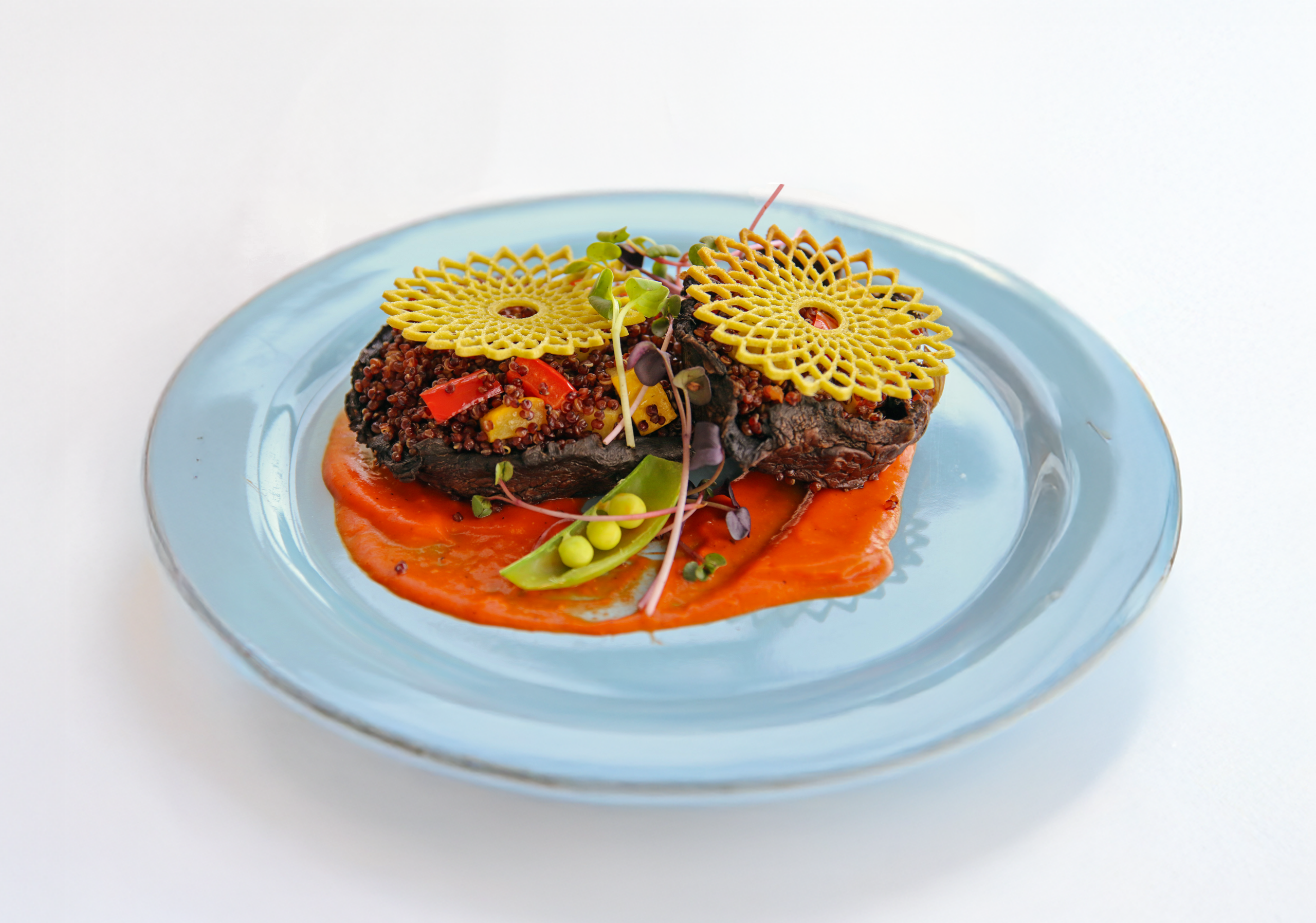
STUFFED MUSHROOM CAPS WITH PEA & MINT
A ‘Wow’ Upgrade
Menu description: Roasted Portobello mushrooms stuffed with quinoa, zucchini, and summer squash, served over a tomato and red pepper sauce and garnished with a light, crisp mint-and-pea tuile.
Chef’s notes: “To give a classic stuffed mushroom entrée a fresh, bright twist, I top it with a delicate tuile made with a mint and pea puree blended with whipped egg whites and Kikkoman® Panko Bread Crumbs. It’s a fresh take on panko-crusting that delivers crispy texture and a great visual payoff. The mint and pea puree, is kind of a ‘hidden recipe’ of its own. You can use it as a vinaigrette on salads or as a finishing sauce to add a splash of bright color and flavor.”
VIEW RECIPE
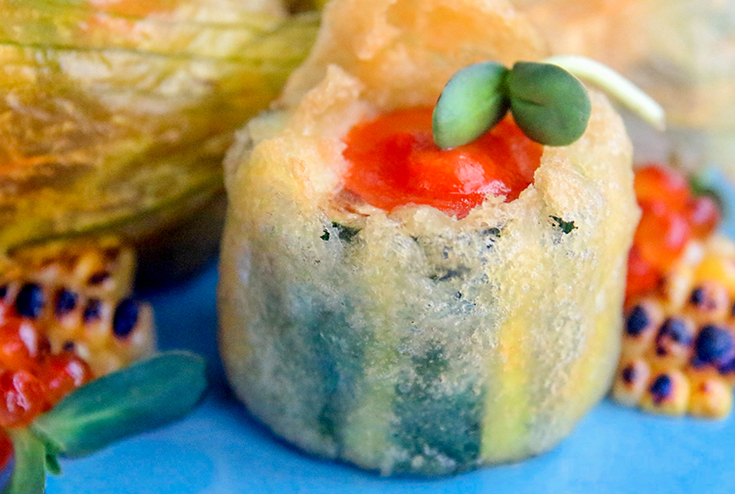
TEMPURA-BATTERED ZUCCHINI WITH FRIED SQUASH BLOSSOMS
Tempura 2.0
Menu description: Zucchini, fried tempura-style, filled with a rich roasted corn and red pepper sauce, served with charred corn planks, tempura squash blossoms, and salmon roe.
Chef’s notes: “Kikkoman® Tempura Batter Mix makes it easy to serve crispy signature tempura items like this. Peeling vegetables with a channel knife creates grooves that help the tempura coating cling better. Rather than serving a sauce on the side, I remove some of the center of the zucchini and pipe the sauce right in.
VIEW RECIPE
Sources: *Source: Chartwells Higher Education, 2021 **Source: Technomic, Inc. College & University Trend Report, 2012 ***Source: Innova Market Insights – Consumer Trends Report, 2025
More Recipes and Info
 Click here to download our free Discover Campus Dining brochure, packed with info, inspo, and on-trend recipes for College & University dining.
