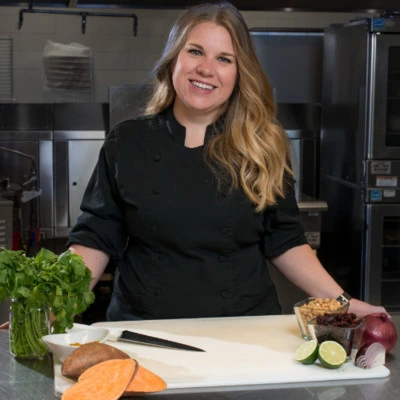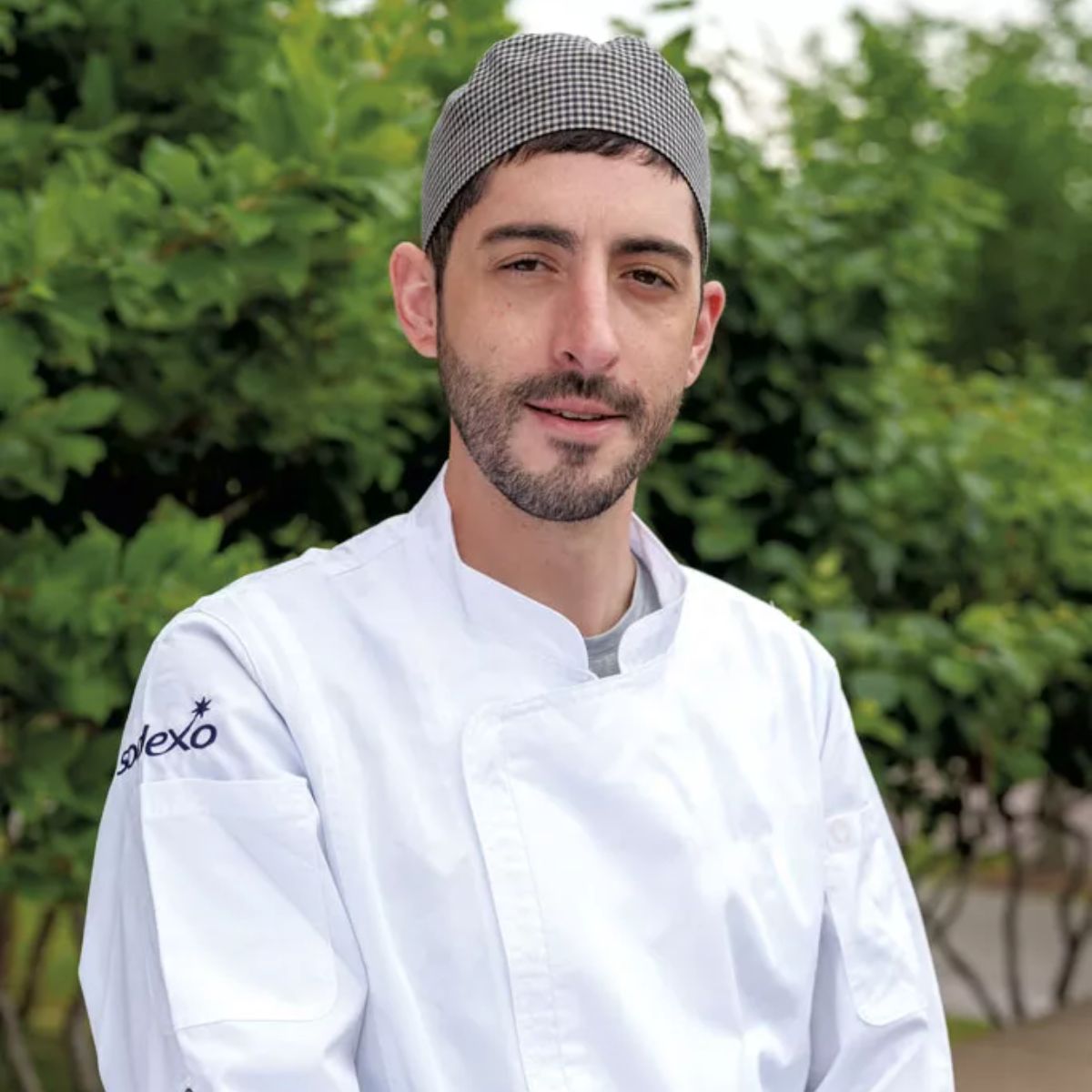
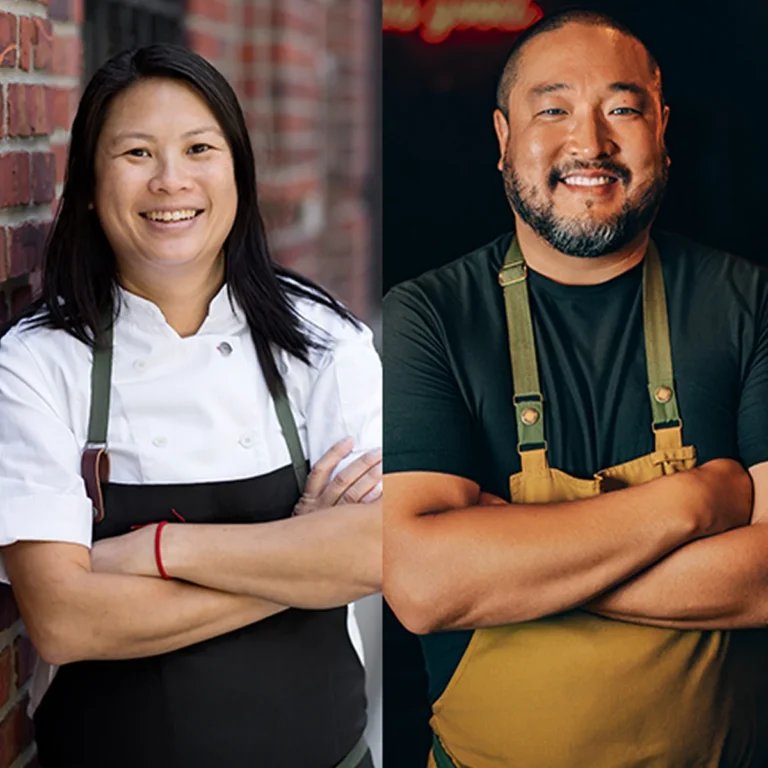

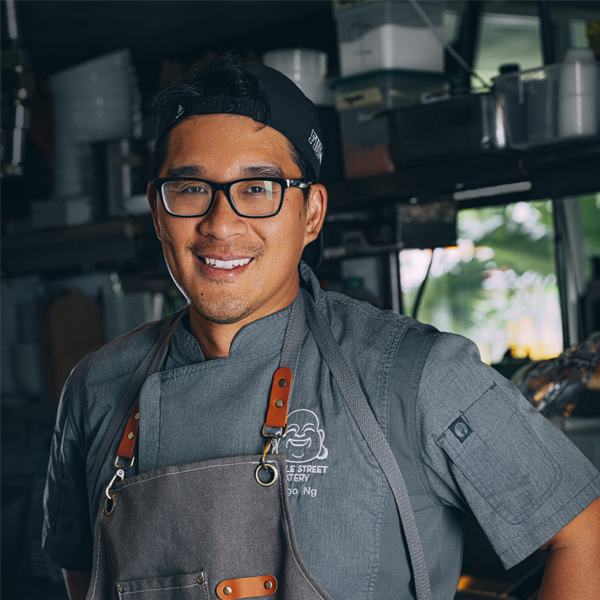
Chef Diego Ng is the culinary force behind Temple Street Eatery, where he masterfully blends his Chinese and Latin American heritage into a unique dining experience. Born in Venezuela Diego brings a rich, multicultural perspective to his cooking, combining traditional Asian flavors with the vibrant tastes of Latin cuisine. Since opening Temple Street Eatery, he has garnered a loyal following for his innovative dishes that pay homage to his roots while pushing culinary boundaries.
Q&A with Chef Diego Ng
A 2025 inductee to the Kikkoman Kitchen Cabinet, our inner circle of leading-edge chef partners, Chef Diego Ng’s cooking tells his life story on a plate.
Born in Venezuela to Chinese parents and raised in the US from the time he was 13, Chef Diego Ng’s love of food and hospitality was fueled by his family’s frequent gatherings around meals that celebrated their dual heritage.
Chef Diego is the co-founder and chef at Temple Street Eatery in Ft. Lauderdale, Florida, which he and Chef Alex Kuk, opened in 2014. Together, they bring a vibrant blend of cultural influences to their menu, marrying the rich flavors of Latin America with the traditional small bites and dishes of Chinese, Japanese, Hawaiian, and Vietnamese cuisines.
Q: Tell us about your culinary education.
A: I went to the Chaplin School of Hospitality at Florida International University in Miami, but I would say my culinary education really came from working in restaurants and traveling.
My first job was taking food orders at a Chinese takeout spot when I was 14. Four years later, my brother opened a Thai-and-sushi restaurant and that’s when I first stepped into the world of the kitchen, and right away, I was hooked.
Q: Was there a moment early on that changed everything for you?
A: Yes, when I was going to FIU, I volunteered to work at the South Beach Food and Wine festival, and I saw that Chef Morimoto was cooking there. He was one of my idols, and I said, “I don’t care what I have to do, I’m going to volunteer for him.”
When the festival was over, I made a little business card, and I handed it to Morimoto, and I said, “Chef, I’m just a student volunteer, but if there is ever an opportunity, I would love to work with you guys.”
Three months later, I got a call, “If you’re serious about working with us, we’re opening a location in Boca Raton, and you could do a stage.” I said, “Absolutely, yes!”
They gave me a position in the pantry, and over the next four years, I worked through all the stations—salads, sushi, breaking down fish, butchering, and everything—it was an amazing apprenticeship. So, I’m glad I made that little business card!
Q: Where did you go from there?
A: My dad gave me some great advice. He said, if you really want to go into culinary, you can learn all the tricks you want in a restaurant, but you’ve got to immerse yourself in the cultures where the food is from. See the world. Taste the food. Meet the people who make it.
So, I took that to heart. I quit my job and took off on a backpacking trip that took me to Europe, Japan, Korea, Hong Kong and all the way down to Peru. It was an amazing cultural immersion. And then I came back and worked in a lot of great restaurants in Miami and New York before we opened Temple Street Eatery.
Q: What’s your philosophy of food and cooking?
A: When I was starting out, I always got assigned to make the family meal. But after a while, I realized, it wasn’t just because I was the young one. It was also because the chefs really liked my cooking. One time a chef said to me, in front of everybody, “You cook like my grandma.” Everyone laughed, but I knew he meant it as a compliment, and I took it that way. And I think that was the start of my philosophy: It’s not just about the flavors you create; it’s how your food makes people feel.
When I was traveling, what caught my attention most was the street food. In every country, you find hawker stalls where both the rich and the poor share the same food. It brings people together. So when I finally decided to open a restaurant, I said, ‘That’s what I want to do. I want to create a mom-and-pop shop where people can enjoy comforting, home-style food.’ Today, we describe our restaurant’s concept as ‘Asian American Comfort Food.’ Our menu features rice bowls, noodle bowls, sandwiches, dumplings, and small bites—something for everyone.
Q: Is that different from Asian fusion food?
A: I don’t really like to use the word “fusion.” Our style is food that we grew up eating and food that I saw out in the world, adapted for local ingredients and tastes here in Florida. And over time, I’ve brought more of my own Chino-Latino influences into the mix.
Q: Tell us about a few dishes on your menu that express that idea of “Asian American Comfort Food.”
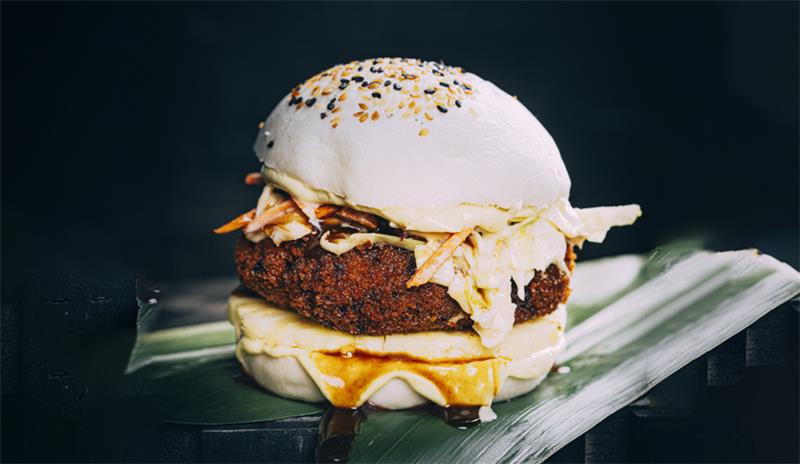
A: Our Katsu Burger is the dish that started the whole Temple Street Eatery journey. When I was in Kobe, Japan, I found this little butcher shop where they were serving menchi katsu. Menchi means “minced meat” and menchi katsu is a minced meat patty that’s breaded and fried. They put katsu sauce and mayo on it, wrap it in paper, and you eat it handheld as you’re walking around. I took one bite, and I thought, “This is amazing! How could I translate this for the US?” I didn’t think America was ready for a fried meat patty wrapped in paper, so I got the idea of turning it into a burger on a bun. When I came back to Florida, I started doing katsu burger popups, and people loved it. And that’s what gave me the confidence to open my own restaurant.
I used Kikkoman® Panko for the breading, and then over time, I started adding my own touches, like switching from a sesame bun to a fluffy steamed bao bun with sesame seeds on top. And then I changed the traditional shredded cabbage to a slaw with an amazing sesame dressing made with Kikkoman® Tamari, Rice Vinegar, and Sesame Oil blended with mayo. And then tapping into the Latin side, I added fresh pineapple that really cuts through the deep-fried flavor. And now it’s one of our most popular dishes. It’s got sweet, tangy, fluffy, crunchy, meaty, pineapple—it’s like a flavor and texture overload!