CHRISTINE LAU:
CONNECTING THE DOTS
How Chef Christine Lau, a 2025 Kikkoman Kitchen Cabinet inductee, is taking Asian flavors on a global journey.

CHRISTINE LAU
CONNECTING THE DOTS
Christine Lau doesn’t just blend flavors—she connects the stories behind them. Over the years, she’s cooked her way through Italian fine dining, Japanese izakaya culture, Itameshi and the cross-cultural New York kitchens that shaped her. Today, she continues to chart her own path—global, intuitive, and unmistakably Christine. Call it what you will… just don’t call it fusion.
“Fusion is cringe,” she says with a grin, “It feels very ’90s—like a dish built from a checklist.”
Christine has no interest in novelty for its own sake. “To me, fusion often means throwing trendy flavors together and hoping they stick,” she says. “I want food that comes from intention, knowledge and respect, not coincidence.”
So how does she describe her eclectic, highly personal, East-Asian-informed style of cooking?
“I think of it as connecting the dots,” she says. “Finding parallels in ingredients, techniques, flavors, and taste-memories I’ve collected over time. It’s just how my brain works every time I eat. So, when it comes to concepting a dish or a menu, for me it’s about connecting all those elements with a local ingredient or idea—and connecting people around a table through flavors they recognize in surprising ways.”
Culinary Beginnings
Christine grew up in Oakland, CA, the daughter of Hong Kong immigrants. Her parents worked long hours, so she and her brother learned to cook early—whatever they craved, they had to make.
Her mom, an avid restaurant-goer, passed down culture through menus, not textbooks. “She didn’t send me to Chinese school,” Christine laughs. “She made sure I was fluent in menu Chinese so I could always order the good stuff.”
Those meals—and that sense of curiosity—became her first culinary education.
Honing Her Craft
In her mid-twenties, Christine realized she couldn’t ignore the call any longer. She joined Alto, a modern Italian fine-dining restaurant in New York, working the pasta station and mastering doughs, sauces, and timing. At Centovini, under Chef Patti Jackson, she refined her technique and deepened her love of Italian ingredients.
Whenever she could take even 10 days off, she traveled through Thailand, Vietnam, Hong Kong, Taiwan, Japan, and Korea, tasting her way across Asia.
“Those trips built my flavor library,” she says. “Every dish I make now pulls from those memories.”
Kimika: Connecting Italy and Japan
Christine’s early years cooking Italian, combined with later work at Bar Basque, Sea Grill under Chef Yuhi Fujinaga, and Bar Chuko Izakaya with Morimoto alums, sharpened her ability to move between cuisines with ease.
In 2020—just a few months into the pandemic, when most restaurants were closing—she launched Kimika in Manhattan’s NoLita neighborhood, perfectly placed just north of Chinatown and Little Italy.
“We built the menu like an Italian restaurant—snacks and small plates, pastas, rice dishes, larger plates, sides, and desserts—but the flavor story was Itameshi,” she says. But for Christine, it was never about a 50/50 blend of Japanese and Italian influences.
“I started with what’s delicious in both cuisines and looked for the parallels. And then I looked beyond them, so the food ended up being a mix of Japanese and Mediterranean, with a touch of Chinese influence from my roots. Basically, it was kind of the food version of my life story—and that’s still how I cook.”
Kimika was an instant hit and earned a James Beard Award semifinalist nod for Best New Restaurant. Since then, Christine has gone on to launch other successful concepts, including Chino Grande in Brooklyn—her tribute to New York City’s Chinese-Latin American restaurants, plus pop-ups, residencies, and chef’s table collaborations.
Flavor Without Borders
Christine’s cooking philosophy mirrors Kikkoman’s—balance, craftsmanship, and flavor without compromise.
“Every household I visited growing up had Kikkoman Soy Sauce in their cabinets,” she says. “It’s an American icon, and I love that it’s brewed here in the US.”
“Kikkoman’s other sauces are some of my go-tos as well,” she adds. “They bring depth and umami, but also that clean finish you need when you’re layering a lot of flavors.”
From Soy Sauce to Sushi Sauce and Sriracha, she relies on Kikkoman products to move seamlessly between cuisines. “They give me consistency, quality, and flexibility I can always count on,” she says.
Cooking is Connecting
For Christine Lau, cooking isn’t just about blending cuisines. It’s about finding and forging connections. Every dish is a passport stamp, a memory, and a love letter to where she’s been—and where she’s headed next.
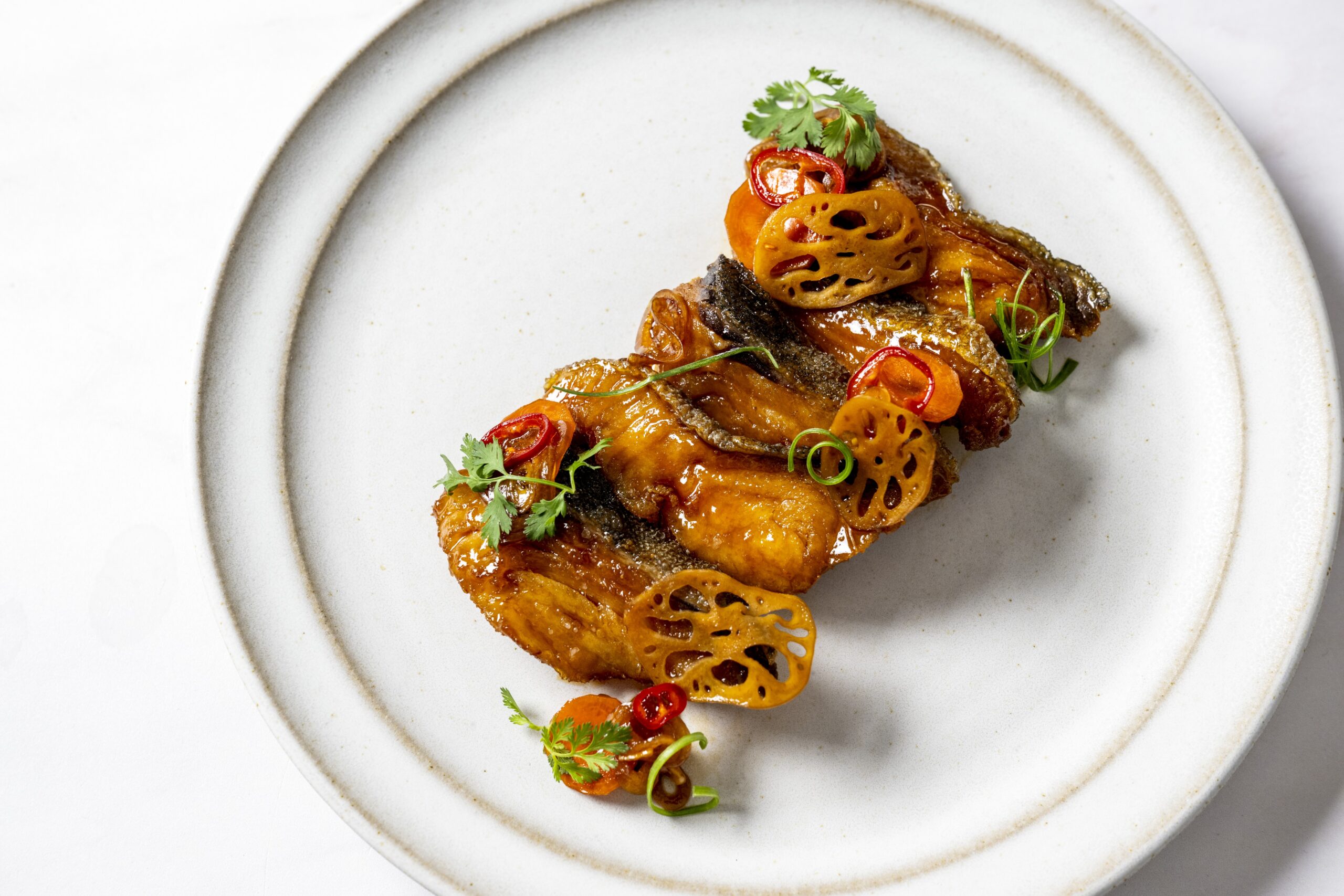
SHANGHAINESE SABLEFISH ESCABECHE
Layers of Flavor, Texture and Umami
Christine fuses the deep, soy-braised richness of a Shanghainese classic with the bright acidity of Caribbean-style escabeche. Buttery sablefish (black cod) is deep-fried, then marinated with carrots, shallots, lotus root, and chiles in a blend of Kikkoman® Soy Sauce, Sushi Sauce (Unagi Tare), Kotteri Mirin, and Rice Vinegar. “Those sauces play together beautifully,” Christine says. “You get savory umami, sweetness, and tang all in one bite.”
VIEW RECIPE
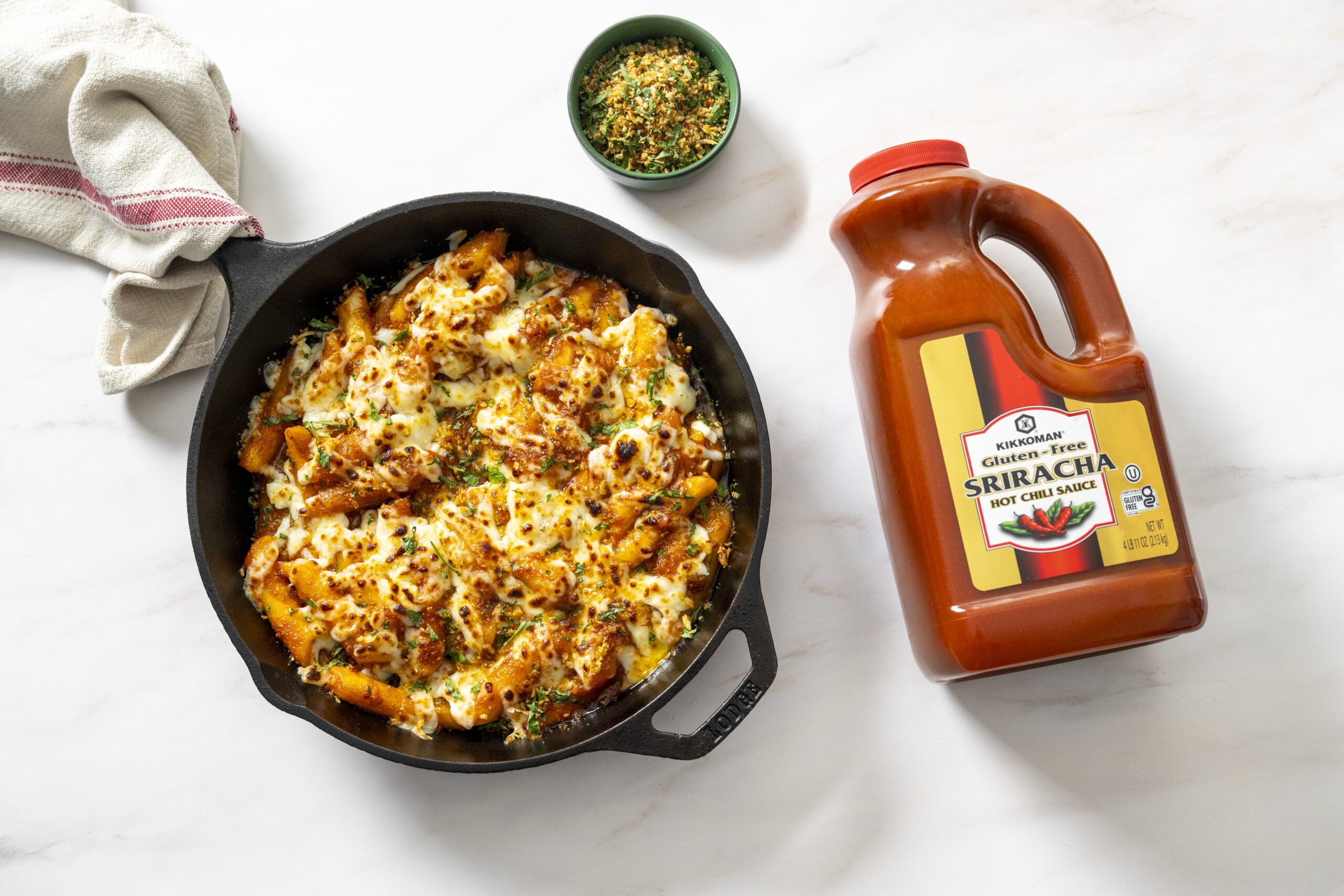
RICE CAKES AL FORNO WITH ‘NDUJA, TOMATO, AND SRIRACHA
East-West Comfort with a Kick
Christine’s clever spin on pasta al forno swaps in chewy rice cakes for noodles. She crisps them in a skillet, tosses them in a spicy ‘nduja ragù made with Kikkoman® Sriracha, and a touch of Kikkoman® Oyster Sauce, then tops it all with mozzarella for a bubbly, broiled finish. A fried-shallot and ichimi togarashi gremolata adds crunch and heat.
VIEW RECIPE
Request a Sample from Kikkoman